Why Lucky 9 Still Fills Tables in 2026
Walk into any PAGCOR-operated casino floor in Metro Manila on a Friday night and you will notice something: the baccarat tables are packed, but so is the Lucky 9 table tucked near the slot area. It is not as loud as the baccarat crowd, but it has its own steady following. In 2026, Lucky 9 remains one of the most played Filipino card games in both land-based and online casinos, largely because the rules are simple enough to learn in ten minutes but the drawing rule still gives players something to think about.
Most Filipino players who grew up playing pusoy dos or tong-its find Lucky 9 familiar. You get two cards, you add the values, and the last digit of the total is your score. The dealer draws a third card under specific conditions, and whoever is closer to nine wins. That is the short version. The long version is what this guide is for.
Before anything else, a word on the name. Lucky 9 is sometimes called Lucky Nine, Hua Quin, or even Chinese Baccarat in some Filipino forums, though Hua Quin is technically a different game with different drawing rules. If you sit at a table and the felt says Lucky 9, assume the rules below apply. If it says Hua Quin, ask the dealer for the house rules because they vary.
1. Card Values and the Modulo 10 Rule
The core of Lucky 9 is the modulo 10 rule. You add the values of your cards, and you only keep the last digit. So a 7 and a 6 make 13, which counts as 3. A 10 and a 9 make 19, which counts as 9. That is the whole scoring system.
Here is how each card is valued:
- Ace = 1 point
- 2 through 9 = face value
- 10, Jack, Queen, King = 0 points
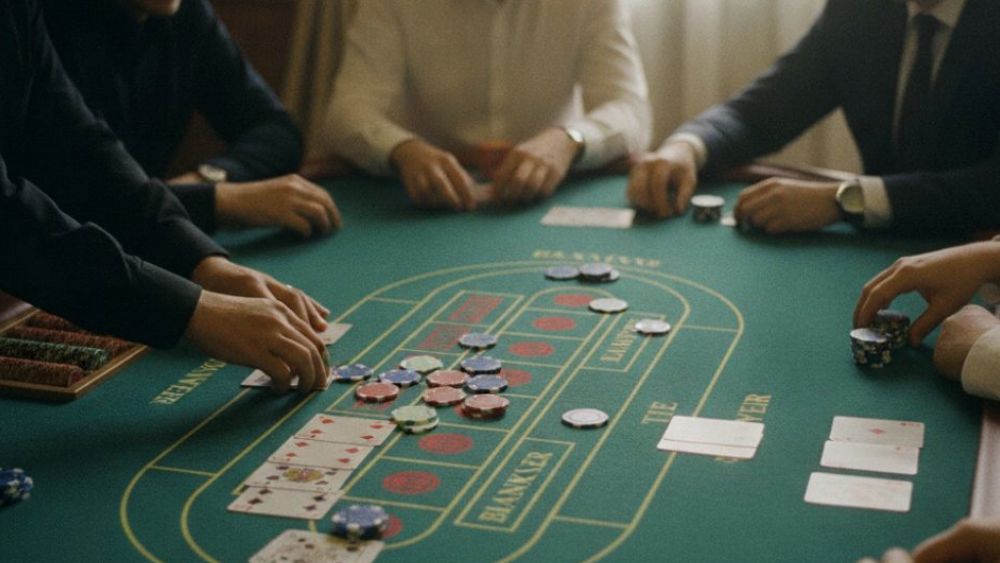
This is where Lucky 9 differs from baccarat in a way that trips up new players. In baccarat, 10s and face cards are also worth zero, so that part is the same. The difference is that Lucky 9 has no separate player and banker hand in the same way. You are playing against the dealer, and there are typically three betting options: Player, Dealer, or Tie.
A quick example. You are dealt a 9 and a King. Your total is 9 + 0 = 9. That is the best possible hand, and it beats anything except another 9, which is a push.
2. The Natural 9 and Natural 8
If your first two cards total 9, that is a natural 9. If they total 8, that is a natural 8. Both are strong, but the natural 9 is the stronger one and usually pays slightly better in some house rules, especially if you bet on the Player side.
Not all Lucky 9 tables treat naturals the same way. On most PAGCOR tables and on the majority of online Lucky 9 variants available to Filipino players in 2026, a natural 9 or natural 8 stops the drawing immediately. No third card is dealt to that hand. The other hand may still draw if its total is low enough, but the natural hand is locked.
If you have a natural 9, do not second-guess it. The hand is done. The only thing that beats you is another natural 9, and that is a push, not a loss.
Some tables pay a bonus on a natural 9, often 2:1 on the Player bet. Read the table signage or the game's paytable screen before you sit down. This single detail can shift the house edge by a percentage point or two, and over a long session that matters.
3. When the Third Card Is Dealt
This is the part that separates Lucky 9 from the simpler two-card games you may have played at family reunions. The third-card rule is not identical across all variants, but the most common version used in Philippine casinos works like this:
- Both Player and Dealer receive two cards face up.
- If either hand has a natural 8 or 9, it stands. No third card.
- If the Player's total is 6 or 7, the Player stands.
- If the Player's total is 0 to 5, the Player draws a third card.
- The Dealer then draws based on the Player's final total and the Dealer's own two-card total.
The dealer's drawing decision is where it gets slightly more complex. In the standard Lucky 9 rule set, the dealer draws a third card if their total is 0 to 5, regardless of what the Player has. If the dealer's total is 6 or 7, the dealer stands. If the dealer has an 8 or 9, that is a natural and the dealer stands automatically.
Some variants add a wrinkle: the dealer draws on a 5 only if the Player's third card was 4 or higher. This is closer to baccarat's drawing table. If you are playing online, check the in-game rules screen. If you are at a land-based table, ask the dealer before you place your first bet. Do not assume.
4. Payouts, Commissions, and the Tie Bet
Standard Lucky 9 payouts at most Philippine tables look like this:
- Player bet wins: 1:1, sometimes 2:1 on a natural 9
- Dealer bet wins: 1:1, though some tables charge a 5% commission on dealer wins
- Tie bet wins: 8:1 or 9:1, depending on the house
The commission on dealer wins is the single most misunderstood part of the game. In baccarat, the banker bet pays 0.95:1 because of the commission. In Lucky 9, some tables apply the same logic, and some do not. If there is no commission, the dealer bet is usually the better bet mathematically because the dealer draws last and has a slight positional advantage. If there is a 5% commission, the two sides are closer to even, and the tie bet becomes even less attractive than it already is.
Speaking of the tie bet: it looks tempting at 8:1, but the actual probability of a tie in Lucky 9 is roughly 9% to 10%, depending on the exact rule set. That gives the house an edge of around 10% to 15% on the tie bet, which is steep. Treat the tie bet as a novelty, not a strategy.
5. Comparing Lucky 9 to Baccarat and Tong-its
Filipino players often ask how Lucky 9 stacks up against the two games they already know. Here is a quick comparison:
- Lucky 9 vs Baccarat: Baccarat has a fixed drawing table and the banker bet is almost always commissionable. Lucky 9 is looser, with more house-to-house variation. Baccarat's house edge is lower and more predictable. Lucky 9 is faster and, for many players, more casual.
- Lucky 9 vs Tong-its: Tong-its is a rummy-style game where you build sets and runs. Lucky 9 is pure chance. There is no skill component in Lucky 9 beyond bet sizing and table selection. If you want a game where decisions matter, stay with Tong-its.
- Lucky 9 vs Pusoy Dos: Pusoy Dos is a shedding game with ranking of hands and strategic passing. Lucky 9 has none of that. It is closer to a coin flip with cards.
This is not a knock on Lucky 9. It is a game of chance, and that is fine. The appeal is the speed, the simple math, and the social atmosphere at the table. Just do not walk in expecting to outplay the dealer.
6. Bankroll Rules That Actually Work for Lucky 9
Because Lucky 9 moves fast and the outcomes are independent, bankroll management is the only real lever you control. Here are rules that work in practice, not just in theory:
- Set a session loss limit before you sit down. A common rule among Filipino regulars is 20 units per session, where one unit is your minimum bet. If you lose 20 units, you walk.
- Do not chase the tie bet. It pays big but hits rarely. Chasing it is how sessions end early.
- Flat bet or use a mild progression, not a martingale. Martingale systems fail because table limits exist and because a losing streak of 6 or 7 hands is not as rare as it feels.
- Track your time, not just your money. Lucky 9 hands take 30 to 45 seconds. Two hours at the table is roughly 150 to 200 hands. That is a lot of exposure.
If you are playing online, set a deposit limit in the cashier before your first hand. Most PAGCOR-licensed and offshore sites serving Filipino players in 2026 offer this feature. Use it.
7. Table Etiquette and Online Play Notes
At a land-based table, the etiquette is simple. Place your bet before the dealer starts dealing. Do not touch the cards. Do not hand your cards to another player. If you are unsure about a rule, ask the dealer during a break in the action, not mid-hand.
For online Lucky 9, the rules are usually displayed in a small icon at the top right of the screen. Read it once. Live dealer versions stream from studios in Manila and Macau, and the drawing rules can differ between providers. Evolution and Pragmatic Play both offer Lucky 9 variants, and their third-card rules are not identical. If you are switching between sites, re-read the rules each time.
One more thing: in 2026, several online casinos now offer a speed Lucky 9 variant with no third-card drawing and a fixed 1:1 payout on both Player and Dealer. It is faster and simpler, but the house edge is higher. If you want the full game, look for the standard variant, not the speed version.